Saturday, September 22, 2007

Cusco, An Imperial Capital

As part of the course I’m taking on central Andean cultures, we’ve been studying Inkas and their once vast empire that was even greater in size than the Roman. Extending from southern Colombia down the Andes Mountains and along the Pacific coast to what is now Santiago, Chile, the Inka Empire had over 11,000 miles of roads. Inkas had no wheeled vehicles, and horses were unknown until the Spanish conquistadors arrived, but they did have native llamas and alpacas, which were adept at climbing up and down their steep mountain roads laden with up to 50 lbs. each of supplies or trade goods. Since there was a shortage of croplands in the steep mountainous terrain, Inkas became adept at terracing fields up steep hillsides and mountain slopes. Inkas did not use money, and they didn’t even have markets. Instead, men and women were employed on an as-needed basis by Inka overlords for community projects often involving the manufacture of goods or intense manual labor. In this marketless economy, workers were "paid" for their labor by receiving clothing, food, and other necessities and goods. Feasts of copious amounts of food and drink (including chicha, Inka corn beer) were often lavished upon these workers during and after projects. Inka emperors and overlords were very adept at distributing food, clothing, and other items to their populace and nobody wanted for anything.


Cusco, at a literally breathtaking elevation of 11,500 feet, was the capital city of the Inka Empire. It contained monumental edifices and architecture, grand palaces and temples trimmed in gold and silver, making it a fantastic sight to the Spanish invaders (à la Tenochtitlan of the Aztec Empire—how ironic that the Spanish were so impressed with these New World cities, saying there was nothing like them in Europe, before they laid them to waste!). Nobody could visit the city empty-handed, and anyone who visited had better have a sack of goods or materials strapped to their backs. The city was clean and well-kept with large areas of green parkland surrounding its massive imperial architecture.

What’s perhaps most interesting about this Native American capital, however, is that it appears to have been planned and laid out in the shape of a running puma, or cougar, viewed from above. (I can already foresee you UFO and extraterrestrial enthusiasts thinking alien intervention à la Nazca lines!) Look at the city plan above and see if you can spot the animal’s outline in Cusco's overall design.

Okay, if you missed it, take a look at this:

The Sacsayhuaman, or Imperial Palace, is the puma's head while the confluence of the two rivers is its tail. While jaguars roamed the other side of the Andes toward the Amazon, pumas or cougars roamed the Andes themselves.

Monday, August 27, 2007

Biloxi shaman-kings*?

As I’ve been working on my ethnographic sketch of the Biloxi nation to eventually accompany the Biloxi dictionary as my thesis, I’ve been synthesizing the works of various authors over the past century, pulling together some of the bits and pieces that have been written. Also, while in Washington DC to do research at the National Anthropological Archives this past summer, I ordered copies of all of Albert Gatschet’s notes, which finally arrived the other day. Gatschet was the first linguist to do fieldwork on Biloxi in 1886, and he determined that it was indeed a Siouan language, not Muskogean as previously assumed.

During my research, I’m finding mounting, primarily linguistic, clues as to the political make-up of pre-contact Biloxis. The Southeastern Ceremonial Complex (SECC), which incorporates many of the peoples and cultures traditionally associated with Mississippian or "mound-building" cultures, of which Biloxis were apparently a part, was largely agricultural and, as has happened to many agricultural economies through history, became socially non-egalitarian and stratified, including an elite class of ruling nobles. (This was nowhere better represented in the SECC than by Biloxis’ neighbors, Natchez, whose society was divided into an elite ruling nobility carried around on litters who referred to the "common" folks as "Stinkards.") There is mounting evidence that these ruling nobles were also members of an elite priesthood, which makes them quite similar to what we've learned about Mayan societies of ancient Mesoamerica. There is some linguistic evidence that Biloxis may have shared a similar system of nobles vs. commoners.

The evidence? In Gatschet’s materials, there is a term yaaxi (also ąyaaxi), literally 'mysterious' or 'sacred' person, which Gatschet states meant ‘conjurer’ but was also sometimes used for ‘chief.’ Traditional Native American shamans, usually referred to as medicine men or women, could be either beneficent healers of the sick and injured, or they could be malevolent "sorcerers" or "witches" who could cause illness or injury with the help of evil spirits. The term ‘conjurer’ of course is usually associated with the malevolent sorcerer. It thus appears in the data that Biloxi conjurer = chief. In Biloxi oral tradition, there is also reference to their chief being seated in an elevated position, perhaps on a raised chair, platform, or throne. Thus, I think it seems reasonable to hypothesize a Biloxi "shaman-king" who was not only ruler of his people but also the head healer and sorcerer.

As stated before, this would put the Biloxi chief in line with what anthropologists are learning of other SECC societies AND with ancient Mesoamerican societies. Imagine the power wielded by these kings, who could control their citizenry through its manipulation of its citizenry's fear of the unknown spirit world that the chief could control, and who, in line with typical shamanism, could "transform" into powerful animal spirits such as a panther (or jaguar in Mesoamerica) or a raptorial bird such as the eagle. What better way to "earn" the respect, obedience, and worship of your populace!

Anyway, this is what I've come up with through my research so far.
UPDATE: Please be aware that I employ the term "shaman-king" loosely as it is still very much debated as to whether the priests or sorcerers of Native America, or anywhere outside of Siberia where the term shaman originated (a Tungus term), should be called "shamans". They technically do not fit the specifications of the term as applied in Siberia. My colleague and friend, Alice Beck Kehoe, is adamantly opposed to this term being employed by anthropologists outside of the confines of Siberia.

Saturday, August 18, 2007

Watson Brake
Oldest pyramidal complex in North America

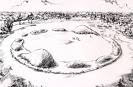
The dates of Mississippian or "moundbuilding" culture seem to be getting pushed back further in time. While Poverty Point was previously considered the oldest "mound" site in North America, that distinguished honor now apparently belongs to Watson Brake, discovered about 30 years ago, also in Louisiana, near Monroe. While Poverty Point dates back to about 1500 BC, Watson Brake apparently dates back to about 3400 BC. Watson Brake is a collection of 11 pyramidal mounds arranged into a large oval apparently surrounding a large central plaza.

Watson Brake mound site


Unlike Poverty Point, as yet there are no signs of residential sites at Watson Brake. Anthropologists currently speculate that Watson Brake may have been a constructed site for a band or bands of hunter-gatherers to conglomerate, perhaps for ritual or ceremonial purposes.

Interestingly, Watson Brake seems to predate the Olmec civilization by almost 2,000 years. The Olmecs also erected "mounds," or earthen pyramids, thought to be the forerunners of later Mayan and Mexica (Aztec) stone pyramids. (Mounds, or pyramids, were also built in the Andes region of South America.) This leads me to wonder if these Watson Brake "moundbuilders" may have been related to Olmecs, perhaps their forebears who decided to travel farther south into southern Mexico and became the "mother culture" of the later Mayas and Aztecs. Or perhaps much of Native America descends from a common culture that began erecting pyramidal and other monumental structures as terrestrial representations of their view of the cosmos and spiritual beliefs.


More food for thought!

Sunday, July 01, 2007

The Lady of Cofitachequi


I’ve been doing some research and reading on the pre-Columbian southeast (US), partially in trying to piece together more of possible Biloxi sociopolitical history in an overall geopolitical and geocultural context. I’ve discovered some interesting tidbits brought down to us via the journals of the De Soto expeditions of the sixteenth century.


Among these tidbits is evidence of definite social stratification and class structure, including reverence for high chiefs or kings (and, at least in one case, a queen). One of these “paramount chiefs” who commanded a number of chiefdoms distributed over an area of at least one thousand square kilometers (Smith & Hally 1992) was named by the Spaniards “The Lady of Cofitachequi.” She was carried in a litter on the shoulders of some of her subordinates to meet the De Soto expedition. She was not treated very well by her Spanish visitors, however, and in fact was kidnapped by De Soto’s men after they pillaged her primary village and supplies. They apparently took her captive to use as a guide in locating another chiefdom at Coosa. At one point on the journey, she and one of her female slaves escaped, apparently never to be seen again by De Soto (luckily for her!).

Such encounters with Native American chiefs or kings (or queens) being carried on litters was apparently rather frequent, as the paramount chief at Coosa was also carried on a litter by his subordinates, and Natchez chiefs were also carried about on litters.


Natchez chief carried on litter

I find this particularly interesting in regards to the Native southeastern US, as there seems to be mounting evidence that the pre-Columbian Southeastern Cultural Complex (SECC) may have had more in common sociopolitically with Mesoamerica (Olmec and Maya) than we may have ever thought given the evidence of class distinction, high reverence for the ruling elite, and the layouts and monumental architecture of Mississippian and SECC cities (e.g., Cahokia, Moundville, Poverty Point).

Reference:

Smith, M. and D. Hally. 1992. Chiefly Behavior: Evidence from Sixteenth Century Spanish Accounts. In Lords of the southeast: social inequality and the native elites of southeastern North America, 1992 Archeological Papers of the American Anthropological Association, No. 3. Barker, A. and T. Pauketat, eds.

Sunday, June 24, 2007

Easter Island: From Paradise to Purgatory


I have been reading parts of Jared Diamond’s latest book, Collapse: How Societies Choose to Fail or Succeed. I was intrigued by one chapter in which he talks about Easter Island (natively called Rapanui, cf. Hawaiian lapa nui, ‘big ridge or slope’). I’d known about EI’s large statues (moai) and its platforms (ahu) supporting the moai. I did not realize, however, until reading Diamond’s chapter, how much of an ecological disaster EI is. As Diamond puts it, "...whole forest gone, and all of its tree species extinct" (2005:107). EI was once a "diverse subtropical forest of tall trees and woody bushes" including among its native species perhaps the largest palm in the world, even larger than the now current largest palm, the Chilean palm. These palms measured about seven feet in circumference. EI was home to at least six native land birds, including heron, two species of parrot, and a barn owl. It was once the richest breeding ground in Polynesia and perhaps all of the Pacific.

Once Polynesians arrived on this remotest of the world’s islands from western Polynesia (most likely from Mangareva), deforestation began, apparently reaching its peak around 1400 AD. This total deforestation was due to various factors, not the least of which was to have wood for heating (EI is subtropical and drops to around 50° F in winter), rope-making (for pulling the huge moai), and canoe-building for transoceanic voyages. EI had had a strong civilization divided into territories ruled by chiefs who erected larger and larger moai, representing high-ranking ancestors, to assert their egoistic sense of power and dominance. There were 887 moai carved, averaging 12 tons each, often pulled for a distance of up to nine miles to be erected on an ahu. The largest moai built was 32 feet tall and weighed a mere 75 tons. (This apparently occurred just before deforestation reached its peak.) EI’s huge statues, by the way, although often touted as mysterious or even the products of "alien contact," had provenance in native Polynesia, as large statues were also found on Mangareva, the supposed origin of Easter Islanders, and large stone monuments were also constructed on Tonga, as Polynesians eventually sailed their way to all corners of the Pacific.


The irony of what EI was and what it soon became is exemplified by this cruel metaphor: after the construction of hundreds of massive multi-ton statues, there was a proliferation of little statues called moai kavakava "depicting starving people with hollow cheeks and protruding ribs. Captain Cook in 1774 described the islanders as ‘small, lean, timid, and miserable’" (Diamond 2005:109). The population declined by about 70% between 1400-1600, partly because the islanders turned to cannibalism for survival. Diamond states, "Oral traditions of the islanders are obsessed with cannibalism; the most inflammatory taunt that could be snarled at an enemy was ‘The flesh of your mother sticks between my teeth’" (2005:109).


I was frankly shocked by the details of Diamond’s investigation into EI’s ecological and sociocultural history. It is rather easy to equate EI’s downfall with what is happening now on a global scale, and Diamond makes this point loud and clear. If you’re curious to learn more, I highly recommend this book.

Friday, June 15, 2007

Maččan, Wa Xawwan, 'inn Makkeweks
Coyote, His Wife, and Makkeweks

A Rumsen Story


The following is another Rumsen Ohlone story. Makkeweks, by the way, is the name of a Rumsen mythological "sea monster." I just completed a draft of a paper with this text and a review of the grammar incorporated in it. I have not included the grammatical notes in this post.


Neeyink ku wattin kaawtak maččan. Neeyink ku was kayy wa xawwan. Kuu ku me koyypon. Neeyinkmur Makkeweks ku was koyypomp. Neeyink ku was maččan koyypomp. Neeyinkmur ku was Makkeweks koyypomp maySantopin. Neeyinkmur ‘innay Sa lačyankw maččan xawwa. Neeyinkmur lakkuy wa koyyponin. Maččan was kayy: tommins me ‘etten, xakkaw, ‘immey me ‘ettenakay 'išku kuu koyypon kuumur was monsemiki Makkeweks wamur ‘etten. Tanmur lakkuy, neey ku was liiw maččan, neey ku was wattis ‘ewwey, xuyyamur kuu tonn was sakkes lattap Makkeweks Sa lačyankw. Neeyink ku ‘ummap maččan, neeyinkmur naterimp xuya sottow, xuya saanay xuya sottow ‘išku muSSen neeyink ku muSSey. Neeyink ku xaal maččan wa ‘oxšenin, neeyink ku čunnuy, neeyink ku čitt. Neeyink ku puSSep(iki) wa xawwan neeyink ku kappes ‘attap xallu rottey mur wa čunn maččan, tanmur čitt.

1. Neey-ink ku watt-in kaaw-tak maččan.
then-? IRREAL come-PAST beach-LOC coyote


2. Neey-ink ku was kayy wa xawwan.
then-? IRREAL 3S-ACC say 3S-POSS wife

3. Kuu ku me koyypon.
NEG IRREAL 2S be.afraid

4. Neey-ink-mur Makkeweks ku was koyypo(n)-mp
then-?-? IRREAL 3S-ACC be.afraid-CAUS

5. Neey-ink ku was maččan koyypo(n)-mp.
then-? IRREAL 3S-ACC coyote be.afraid-CAUS

6. Neey-ink-mur ku was Makkeweks koyypo(n)-mp maySantop-in.
then-?-? IRREAL 3S-ACC be.afraid-CAUS rise.up-PAST

7. Neey-ink-mur ‘innay Sa lačyankw maččan xawwan
then-?-? fall DEF woman coyote wife

8. Neey-ink-mur lakkuy wa koyypon-in.
then-?-? die 3S be.afraid-PAST

9. Maččan was kayy: tommins me ‘etten, xakkaw, ‘immey me ‘etten-akay
coyote 3S-ACC say ? 2S-POSS uncle ? ? 2S-POSS uncle-PL

10. ‘išku kuu koyypon
in.order.to NEG be.afraid

11. kuu-mur was monsem-iki Makkeweks wa-mur ‘etten.
NEG-? 3S-ACC advise-PAST 3S-POSS-? uncle

12. Tan-mur lakkuy, neey ku was liiw maččan, neey ku was watt-is
when-? die then IRREAL 3S-ACC ? coyote then NEG 3S-ACC come-?

13. ‘ewwey, xuyya-mur kuu tonn was sakkes lattap Makkeweks Sa lačyankw.
far down-? NEG ? 3S-ACC look.at ? DEF woman

14. Neey-ink ku ‘ummap maččan, neey-ink-mur nateri-mp
then-? IRREAL ? coyote then-?-? ?-CAUS

15. xuya sottow, xuya saanay xuya sottow ‘išku muSSen neey-ink ku muSSey.
down fire down side down fire in.order.to get.warm then-? IRREAL warmed

16. Neey-ink ku xaal maččan wa ‘oxšen-in,
then-? IRREAL jump coyote 3S do.magic-PAST

17. neey-ink ku čunnuy, neey-ink ku čitt.
then-? IRREAL sing then-? IRREAL dance

18. Neey-ink ku puSSep-(iki) wa xawwan neey-ink ku kappeS ‘attap xallu
then-? IRREAL revive-(PAST) 3S-POSS wife then-? IRREAL three times jump

19. rottey mur wa čunn maččan, tan-mur čitt.
be ? 3S-POSS song coyote when-? dance

The coyotes went to the beach. Coyote told his wife not be afraid. But then she became afraid when Makkeweks rose up from the water, and she fell dead from fright. Coyote had told her that the sea lion, mussel, and crab were her uncles and not to be afraid, but he did not tell her that Makkeweks was her uncle. When she died, Coyote carried her on his back and laid her down on her side next to the fire so she could get warm. She got warm. Then Coyote jumped while performing a shamanic ritual, sang, and danced. His wife came back to life then Coyote jumped three times and sang and danced.


Pronunciation:
' = glottal stop (before all words beginning with vowel)
č = English ch
S = retroflex s (with tongue curled back in mouth)
š = English sh
x = no equivalent in English, but like an exaggerated h sound or like ch in German Bach

Monday, June 11, 2007

Biloxis and Aztecs

I recently came across an online version of a paper, apparently part of a book published in 1896 titled, Myths and Legends of Our Own Land by Charles Skinner. Skinner apparently wandered around the southeastern US in the late 1800s visiting various Amerindian tribes and collecting what he could of their stories and mythologies.

He briefly speaks of some Biloxi legends, although as far as I can tell, he doesn’t specify from whom these stories came. But there was an intriguing line in one of these stories:


The southern part of this country was once occupied by a people called the Biloxi, who had kept pace with the Aztecs in civilization.

This is particularly intriguing not only because I work on the Biloxi language and culture, but also because it may have broader implications for the civilizations of the entire native southeast and the Mississippian Culture, or what has often been termed the "Moundbuilder" culture.

Could Biloxis have had a civilization as advanced as that of Aztecs, assumedly including the building of monumental architecture such as pyramids, temples, and ceremonial plazas?

If you’ve looked at my earlier postings, you’ll find that I’ve talked about the Mississippian culture before, including their supposed primary centers, or cities, called Cahokia (in modern Illinois), Aztalan (in modern Wisconsin), and Poverty Point (in modern Louisiana), all more or less located close to the Mississippi River and its tributaries.

While Biloxis are a Siouan tribe who are thought to have migrated south from the Ohio Valley region at some point in ancient history, they did settle in the southeast in what is modern Alabama, Mississippi, and Louisiana. They were close neighbors of Amerindian groups known to have had large settlements, social stratification (i.e., economic disparity), and a high reverence for their chiefs or ruling class, among these the Natchez and Caddo. It is known from post-contact written records that Biloxis had temples in which they placed the preserved skeletons of their chiefs. Interestingly, Biloxis referred to their chiefs and shamans with the same term, ąyaa xi, literally meaning ‘sacred’ or ‘mysterious’ person.

This tempts me to think that Biloxi chiefs may have often been shamans or a priestly class of rulers who could have been on a par with the Olmec and Maya "shaman-kings" of those Mesoamerican civilizations. This would certainly bode well with the idea of the Biloxi civilization having been on a par with the Aztec or even the earlier civilizations of Olmecs and Mayas.

There are theories out there that the Mississippian culture and its cities may have been influenced by those of Mesoamerica, or that there was at least contact between them and dissemination of knowledge. The fact that the cities of Mississippian culture share common traits with those of Mesoamerica, such as the building of pyramids (often referred to as "mounds" in regards to North America*), temples, and monumental plazas certainly makes these theories very plausible and intriguing.

This is all speculative at this point, of course, but it is definitely food for thought in trying to discern what Native America really looked like prior to 1492.

* I was recently reading a paper that discussed Olmec "mounds." It seems the first pyramids in Mesoamerica, in the ancient Mixe-Zoquean or Olmec world of the Isthmus, were also made of earth, just as those in the ancient cities of North America discussed above. It seems that, unless these pyramids are made of stone, they are habitually referred to as "mounds" by many archaeologists. Any archaeologists out there want to chime in on the use of this terminology?